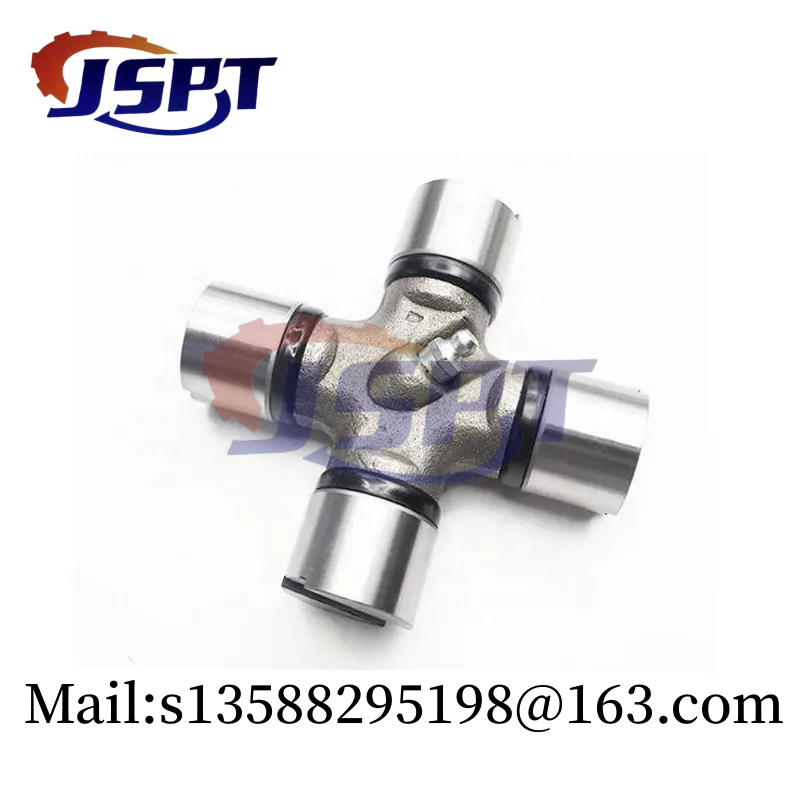
Introduction to Universal Joints in Drivetrains
In the intricate world of automotive engineering, the Vehicle Universal Joint stands out as an essential component within the drivetrain. This ingenious piece of machinery is pivotal in maintaining vehicle stability and ensuring the seamless transmission of power from the engine to the wheels. Understanding its role offers insights into the mechanics of your vehicle, emphasizing why universal joints are integral to vehicular dynamics.
Functionality of Universal Joints
● How U-joints Facilitate Vehicle Movement
The primary function of a universal joint lies in its ability to transmit torque while allowing for changes in angle. This is crucial for a vehicle's drivetrain, as the terrain and movement cause constant fluctuations in angles. The Vehicle Universal Joint permits the driveshaft to articulate, adapting to the suspension's up and down motion. This flexibility ensures a smooth driving experience, even on bumpy roads.
● Role in Power Transmission
Universal joints are instrumental in the continuous delivery of engine power to the wheels. In vehicles, the driveshaft's alignment is often not fixed, requiring components like the Vehicle Universal Joint to accommodate these variations. By allowing differential motion between connected parts, U-joints facilitate the effective rotation necessary for automotive propulsion.
Location and Configuration of U-Joints
● Common Placements in Vehicles
Typically, universal joints are located on a vehicle’s driveshaft, linking it to the transmission and differential. The configuration may vary based on the vehicle's design and drivetrain setup. In rear-wheel-drive (RWD) vehicles, two U-joints are common—one connecting the driveshaft to the transmission, the other linking it to the differential.
● Differences in 4WD, RWD, AWD Configurations
In four-wheel-drive (4WD) and all-wheel-drive (AWD) vehicles, you will often find an additional front driveshaft. This setup involves additional U-joints connecting the front driveshaft to the front differential and transfer case. For longer vehicles like commercial trucks, multiple driveshafts with multiple universal joints are used. The versatility of the Vehicle Universal Joint Factory enables these configurations.
Design and Features of Universal Joints
● Material and Construction Specifics
The design of a universal joint incorporates multiple components working in harmony. Typically made from robust materials like forged steel, these joints undergo carburized heat treatment for enhanced strength. Precision-ground needle bearings ensure optimal load distribution and reduce friction, vital for the U-joint’s longevity and performance.
● Importance of Nitrile Rubber Grease Seals
An essential feature of advanced universal joints is the nitrile rubber grease seal. These seals protect against contaminants and moisture, thereby prolonging the joint's lifespan. Furthermore, some designs include a greaseable feature, which facilitates flushing out old grease and contamination, maintaining the performance integrity of the joint.
Comparison with Constant Velocity Joints
● Differences between U-joints and CV Joints
While both universal joints and constant velocity (CV) joints serve the purpose of transmitting power, their mechanisms differ. CV joints provide a smoother transfer of power at various angles, making them ideal for front-wheel-drive vehicles where driveshaft angles vary more considerably. In contrast, the simplicity and robustness of universal joints make them preferable for the rear driveshafts of RWD and 4WD vehicles.
● Why FWD Vehicles Use CV Joints
Front-wheel-drive (FWD) vehicles benefit from CV joints because these joints accommodate the complex movements involved in steering and suspension better than U-joints. The ability of CV joints to maintain constant rotational speed despite angle changes is crucial for efficient power transmission in FWD setups.
Types of Vehicles Utilizing Universal Joints
● Vehicles Requiring Universal Joints
Universal joints are prominent in rear-wheel-drive, all-wheel-drive, and four-wheel-drive vehicles. These setups demand flexibility in the driveshaft to accommodate the varying angles caused by movement and suspension dynamics. Commercial vehicles like buses and trucks also rely on these joints due to their robust design and ability to handle heavy loads.
● Application in Commercial Transportation
The rugged construction of universal joints makes them well-suited for commercial transportation, where the durability and ability to handle significant torque are paramount. Vehicles used in goods transport, construction, and other heavy industries rely on the sturdy design offered by ODM Vehicle Universal Joint manufacturers to ensure operational efficiency and reliability.
Signs and Symptoms of Worn U-Joints
● Identifying Issues with Universal Joints
Recognizing the symptoms of a failing universal joint is crucial to maintaining vehicle safety and performance. Common signs include unusual noises such as clunking and squeaking while driving, especially during acceleration or deceleration. Vibrations emanating from the drivetrain are also indicative of potential U-joint issues.
● Importance of Regular Inspections
Conducting regular inspections for your vehicle’s universal joints is essential. This proactive approach helps in early identification of wear and tear, preventing sudden failures that could lead to more severe drivetrain damage. Vehicle Universal Joint Exporters stress the importance of routine checks as part of a comprehensive vehicle maintenance regimen.
Maintenance and Replacement Strategies
● Best Practices for U-joint Upkeep
Maintaining a universal joint involves regular lubrication and inspection. Ensure that the joints are free from excessive play or undue wear. Utilizing high-quality lubricants can significantly enhance their lifespan. Consulting the Vehicle Universal Joint Factory guidelines for specific maintenance intervals is advisable for optimum results.
● Indicators for Replacement Necessity
When a universal joint begins to fail, replacement becomes necessary to avoid compromising vehicle safety. Besides the symptoms like noise and vibrations, visible wear on the bearing caps or an increase in movement between the components are strong indicators for replacement. Engaging professional services from experienced ODM Vehicle Universal Joint suppliers ensures quality replacement parts and proper installation.
The Impact of Road Conditions on U-Joints
● How Terrain Affects U-joint Longevity
Challenging road conditions, including rough terrains and potholes, can accelerate the wear of universal joints. The constant flexing and movement required to adapt to uneven surfaces increase stress on the joint components. Drivers frequently navigating such conditions must be particularly vigilant regarding U-joint maintenance and potential replacements.
● Precautions for Preserving Joint Life
To extend the lifespan of your vehicle’s universal joints, adopting cautious driving habits on rough terrains is advisable. Ensuring regular maintenance and timely lubrication contributes significantly to their longevity. Additionally, choosing high-quality components from a reputable Vehicle Universal Joint Exporter can help mitigate premature wear.
Conclusion: Importance of U-Joints in Automotive Systems
● Recap of U-joint Significance
In conclusion, the universal joint is a critical element in the efficient functioning of vehicle drivetrains. Its ability to transmit torque across varying angles while adapting to suspension dynamics underscores its importance across different vehicle types. Understanding the role and maintenance of universal joints ensures prolonged vehicle reliability and performance.
● Future Trends in U-joint Technology
Advancements in materials and manufacturing techniques continue to enhance the performance and durability of universal joints. As the automotive industry evolves, so too will the design and application of U-joints, with increased focus on efficiency and longevity, driven by leading Vehicle Universal Joint Factories.
About Jinsai
Zhejiang Jinsai Precision Technology Co., Ltd. is a professional manufacturer focused on the research, development, and production of wheel hub bearings and universal joint assemblies for over two decades. Established in 1999, Jinsai operates from a state-of-the-art facility in Haining, Zhejiang Province, with an annual production capacity of 5.6 million universal joints. Committed to excellence, Jinsai adheres to stringent quality standards, supplying OEM-grade components while continually expanding their product range to meet diverse market demands. With innovation at its core, Jinsai is poised for further growth and collaboration worldwide.