Introduction to Rear Axle U-Joint Functionality
The Rear Axle U Joint, a critical component in many vehicle driveline systems, plays a significant role in the seamless operation of rear-wheel-drive (RWD), four-wheel-drive (4WD), and all-wheel-drive (AWD) vehicles. Known as universal joints (U joints), they form the pivotal link allowing for the needed flexibility between the driveshaft and the differential. This flexibility is essential for managing wheel travel over uneven terrain, ensuring a smooth ride while maintaining the mechanical integrity of the vehicle. The adaptability and effectiveness of these joints can significantly influence ride comfort, vehicle handling, and overall driving dynamics.
● Importance in Vehicle Driveline Systems
U joints are indispensable in various driveline configurations due to their ability to accommodate angular misalignments and transmit rotary motion. Their presence ensures that despite the constant movement of the vehicle's suspension, the rotational forces generated by the engine are efficiently transmitted to the wheels. Without the adaptability provided by U joints, the rigidity of vehicle components would lead to mechanical failure over bumps, potholes, and other road anomalies.
● Basic Mechanics: Enabling Flexible Movement
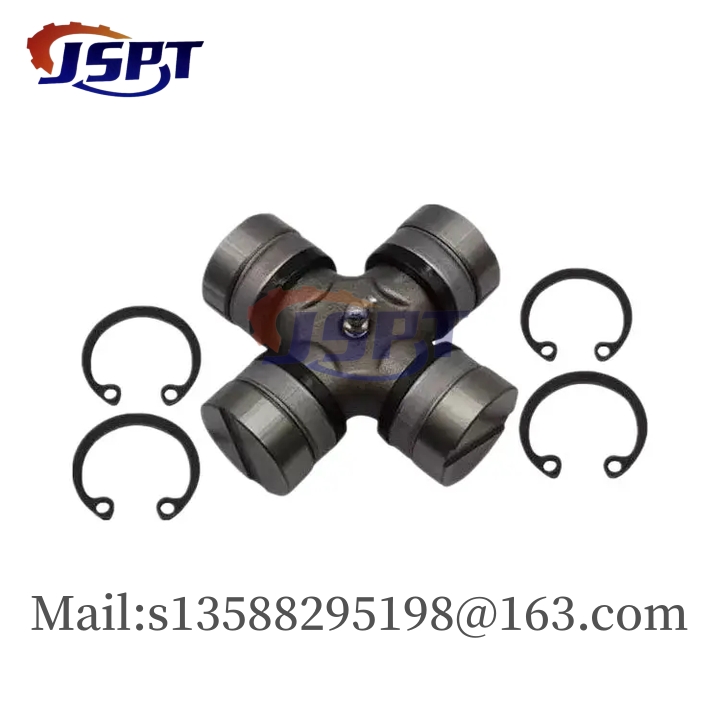
At its core, the rear axle U joint is an X-shaped component with bearings at each arm's end. These bearings are housed within cups that allow for rotational movement along different axes. This setup permits the driveshaft to change angles as needed while maintaining a continuous transfer of torque, a crucial function when navigating diverse driving conditions.
Location and Placement of U-Joints
The strategic placement of U joints within a vehicle's driveline determines their efficiency in transferring engine power to the wheels. Most commonly, these joints are situated at either end of the driveshaft, linking it to the transmission at the front and the differential at the rear.
● Driveshaft Connection Points
In a typical rear-wheel-drive vehicle setup, the U joints at each end of the driveshaft provide the necessary angular flexibility. This flexibility allows the driveshaft to pivot and rotate in tandem with the vehicle's suspension movements. The correct alignment and positioning of these joints are critical in minimizing driveline vibration and maximizing power transmission efficiency.
● Typical Positioning in Various Vehicle Types
While rear-wheel-drive vehicles generally utilize a straightforward dual U joint configuration, four-wheel-drive, and all-wheel-drive vehicles often have additional front U joints. These are tasked with connecting the front driveshaft to the transfer case and the front differential, facilitating enhanced traction and control.
Key Functions of Rear Axle U-Joints
The multifunctional nature of rear axle U joints underpins their importance in vehicular systems. Their role extends beyond merely connecting components; they are pivotal in maintaining vehicular stability and performance.
● Facilitating Lateral and Vertical Movement
U joints accommodate the necessary range of motion required for the driveshaft during vehicle operation. This capability helps absorb shocks from road bumps and uneven terrains, maintaining consistent power delivery while protecting the intervening components from undue stress.
● Maintaining Power Flow and Alignment
Besides enabling movement, U joints are instrumental in ensuring the continuous flow of power from the engine to the wheels. They maintain the alignment between the driveshaft and other driveline components, thus preventing torque-induced vibrations and ensuring a smooth driving experience.
Design and Construction of U-Joints
The design intricacies of U joints contribute to their robustness and longevity. Various materials and engineering practices are employed to ensure these components withstand the rigors of vehicular dynamics.
● Material Composition and Durability
Most U joints are constructed from high-grade steel or alloy materials. These materials are selected for their strength and resilience, with additional treatments like case hardening and carburizing to enhance durability. This ensures that they can cope with the high-torque loads and movement stresses typical of vehicle operation.
● Key Features like Grease Fittings and Seals
Contemporary U joints often include grease fittings, allowing for easy maintenance and prolonging their lifespan by reducing wear. Moreover, seals made of nitrile rubber provide protection against contaminants, ensuring smooth operation even in harsh environmental conditions.
Types of Vehicles Utilizing U-Joints
U joints find application across a vast spectrum of vehicle types. Their utility and design may vary slightly, yet their fundamental purpose remains unchanged.
● Differences Among AWD, RWD, and 4WD
Rear axle U joints are most commonly associated with RWD vehicles, where they serve as the primary connection between the driveshaft and differential. In AWD and 4WD vehicles, additional U joints are installed to accommodate the added complexity of these drivetrains. These configurations necessitate special considerations in joint design and durability to cater to the increased load and varied motion ranges.
● Comparisons with Other Driveline Joints, like CV Joints
While U joints are prevalent in RWD and 4WD vehicles, front-wheel-drive vehicles typically employ constant velocity (CV) joints. CV joints provide a smoother torque transfer through greater angles, which is vital for vehicles that require sharper steering angles. However, U joints remain favored in certain applications due to their robustness and ability to withstand high torque outputs.
Understanding U-Joint Wear and Tear
Like any mechanical component, U joints are subject to wear and tear over the vehicle's lifetime. Understanding these aspects is essential for timely maintenance and repair.
● Factors Influencing Lifespan
The operational lifespan of U joints can vary widely based on factors such as driving habits, road conditions, and maintenance practices. Frequent off-road driving or exposure to harsh environmental conditions can accelerate wear.
● Signs Indicating Replacement Necessity
Common indicators of failing U joints include unusual noises during acceleration, issues with handling, or noticeable vibration emanating from the drivetrain. Early detection and intervention can prevent further damage to the driveline.
Maintenance and Care for U-Joints
Routine maintenance is vital to ensuring the longevity and performance of U joints. Adopting best practices can significantly extend their operational life.
● Importance of Regular Inspections
Regular inspections allow for early detection of potential issues, preventing costly repairs. During these inspections, attention should be paid to signs of wear, such as play in the joint arms or leakage at the seals.
● Best Practices for Lubrication and Care
Greasing U joints regularly helps maintain their functionality by ensuring smooth movement and preventing the ingress of contaminants. Using the correct type of grease and ensuring complete penetration into the joint is crucial for effective maintenance.
Replacement Considerations for U-Joints
When U joints exhibit signs of wear or failure, prompt replacement is necessary to maintain vehicle performance and safety.
● Signs of Failure and Malfunction
Failures are often characterized by a knock or clunking sound during shifts or acceleration. Any excessive vibration or play in the driveline can be indicative of a compromised U joint that needs immediate attention.
● Professional versus DIY Replacement
While some may opt for a DIY approach to replacing U joints, given the complexity and safety implications of driveline work, it is often advisable to seek professional assistance. A certified technician can ensure that the replacement is performed correctly and the vehicle's alignment and balance are maintained.
Comparative Analysis: U-Joints vs. CV Joints
In understanding the role of U joints, it is beneficial to compare them with other types of joints, notably CV joints, to fully appreciate their unique attributes.
● Functional Similarities and Differences
Both U joints and CV joints serve the purpose of connecting driveline components while allowing for flexibility in movement. However, CV joints provide a more constant velocity across angles, making them suitable for the tight steering angles in FWD vehicles. U joints, although less smooth in operation, are simpler in design and can manage higher torque loads effectively.
● Advantages and Limitations of Each
U joints are prized for their durability and ability to handle extreme conditions, while CV joints offer superior performance in maintaining velocity across a range of angles. The decision between using one over the other typically depends on the specific requirements of the vehicle and its intended use.
Conclusion: Ensuring U-Joint Longevity
Understanding the function and maintenance of rear axle U joints is critical for anyone involved in vehicle maintenance or repair. By adhering to best practices in inspection and care, these components can provide reliable service over many miles, ensuring the smooth and efficient operation of the vehicle's driveline system.
Zhejiang Jinsai Precision Technology Co., Ltd. stands as a leading ODM Rear Axle U Joint Factory and Exporter. With over 20 years of experience, Jinsai excels in the development and production of wheel hub bearings and universal joint assemblies. The company operates from its expansive facility in Haining City, Zhejiang Province, renowned for meeting stringent OEM manufacturing standards. Leveraging advanced production and testing technologies, Jinsai provides robust support for OEM and aftermarket needs. With a commitment to quality and innovation, Jinsai is recognized globally for its excellence in manufacturing high-performance automotive components.